
China Travel
Made Simple
Step-by-step video guides for payments, transport, internet, and more — so you can explore China without the stress.
Where Are You in Your Trip?
Start from where you are — we'll point you to the right guides
Choose Your Topic
We've organized videos by topic to help you find what you need quickly

Travel Tips
4Entering China under the 2026 visa-free policy requires a shift from traditional travel prep to digital and hardware compliance. This master overview consolidates the non-negotiable technical, legal, and cultural frameworks required to navigate mainland China frictionlessly. Use the matrices below to configure your smartphone, connectivity, and hardware before arrival.
The Ultimate 2026 China Survival Dashboard
1. Essential App Ecosystem Checklist
To prevent getting locked out of daily operations, your smartphone must pre-install and configure these core applications prior to passing Chinese immigration.
| App Name | Primary Purpose | Crucial Foreigner Hack / Note |
|---|---|---|
| Alipay | All-in-one digital wallet, local metro/bus transit card activator, and mini-program host. | The Hub: Enable "Transport" inside the app to instantly generate QR codes for subway gates. |
| Social communication, venue reservations, and scan-to-order dining mini-programs. | Account Safety: Register before leaving your home country to avoid instant security flags on local IPs. | |
| 12306 English | The only official ticketing portal for China's high-speed rail network. | Passport Gate Entry: Your passport is your ticket. Use this app to verify your exact name match. |
| Didi Chuxing | Mainland China's undisputed equivalent to Uber/Lyft. | Auto-Translate: Features a built-in real-time translation chat tool to talk seamlessly with drivers. |
| Apple Maps / Amap (Gaode) | Complete replacements for the blocked and outdated Google Maps. | iOS Hack: Apple Maps uses localized high-accuracy data in English, completely eliminating GPS drift. |
2. Payment & Transaction Matrix
China operates on a virtually cashless financial network. International physical credit cards are rarely accepted outside luxury hotels.
| Payment Method | Foreign Card Support | 3% Fee Threshold | Practical On-the-Ground Reality |
|---|---|---|---|
| Alipay & WeChat Pay | Yes (Visa, Mastercard, Discover, Amex). | Free under 200 RMB. Transactions over 200 RMB incur a 3% processing fee. | Everyday Default: Split transactions over 200 RMB into smaller payments if possible to avoid the fee. |
| Physical Cash (RMB) | N/A | None. | Legally Accepted, Logistically Hard: Small street vendors frequently lack physical change (Lingqian) for 100 RMB notes. |
| International Cards | Extremely Limited (Luxury hotels/high-end malls only). | Varies by issuer. | Do Not Rely On It: Local restaurants, convenience stores, and taxis cannot swipe overseas physical cards. |
3. Internet Connectivity Decision Tree
Bypassing the Great Firewall to access global platforms (Google, Instagram, WhatsApp) depends entirely on your data routing strategy.
| Connection Type | Wall Bypass (Google/IG) | Setup Friction | Best Suited For |
|---|---|---|---|
| Data-Only eSIM (Nomad, Airalo, Saily) | Instant & Native. Traffic routes through overseas servers. | Very Low. Scan a QR code digitally before departure. No ID verification required. | The Gold Standard: Short-to-mid term tourists (1-30 days) wanting stress-free connection out of the box. |
| Local Physical SIM (China Mobile/Unicom) | Blocked. Requires a persistent VPN client to access global apps. | High. Must find an authorized carrier outlet and undergo mandatory passport identity tracking. | Expats, long-term business travelers, or digital nomads staying longer than 30 days who require a +86 number. |
| Public Wi-Fi (Hotels & Cafes) | Blocked. Strictly bound to the local firewall protocols. | High. Almost all local Wi-Fi splash pages require a Chinese phone number to receive an SMS code. | Budget travelers who are willing to toggle manual VPN protocols constantly to avoid data costs. |
4. 2026 CAAC Aviation Power Bank Regulations
The Civil Aviation Administration of China (CAAC) strictly enforces severe battery rules at airport and high-speed rail security checkpoints. Non-compliant hardware is immediately confiscated.
| Parameter / Rule | Compliance Requirement | Consequence of Non-Compliance |
|---|---|---|
| Capacity Threshold | Must be under 100Wh (approx. 20,000mAh at standard 3.7V). 100Wh–160Wh requires airline approval. | Anything over 160Wh is designated contraband and instantly confiscated. |
| Markings & Labels | Capacity specs (Wh/mAh) must be 100% legible and printed clearly on the device shell. | Faded, scratched, or missing manufacturer labels result in immediate confiscation. |
| Certification | Power banks carried on domestic flights must feature a visible CCC (China Compulsory Certification) mark. | Uncertified or white-label generic power banks will be rejected at security screenings. |
| Carriage & Usage | Carry-On Baggage Only. Absolutely forbidden in checked luggage. Do not use or charge during flights. | Checked bags will be held/opened. Using a power bank in-flight violates civil aviation safety laws. |
5. Real-World Street & Etiquette Hacks
Minor daily cultural friction points that frequently cause acute culture shock for international visitors on Reddit.
| Scenario / Topic | Street Reality & Rules | Actionable Survival Strategy |
|---|---|---|
| Public Bathrooms (Squat Toilets) | Historic sites, train stations, and public parks use traditional squatting pans (Duncuo). | The Paper Rule: Complimentary toilet paper is rarely provided. Always pack pocket-sized tissue packets (Tempo/Jieyou) in your daypack. |
| Gratuity (Tipping) | Tipping is completely non-existent and culturally alien in mainland China. | Do Not Tip: Attempting to leave extra cash in restaurants, taxis, or hotels causes confusion. Pay exactly what the bill states. |
| Personal Space & Crowds | High population density means Western concepts of personal space are routinely compressed in subways and lines. | Do Not Take It Personally: Mild pushing or tight crowding is structural, not a sign of individual rudeness. Stand your ground politely. |
| Drinking Water | Tap water across mainland China is not potable and must not be consumed directly. | Stick to Bottled: High-quality bottled water (like Nongfu Spring) is incredibly cheap ($0.30 USD) and available on every corner. |
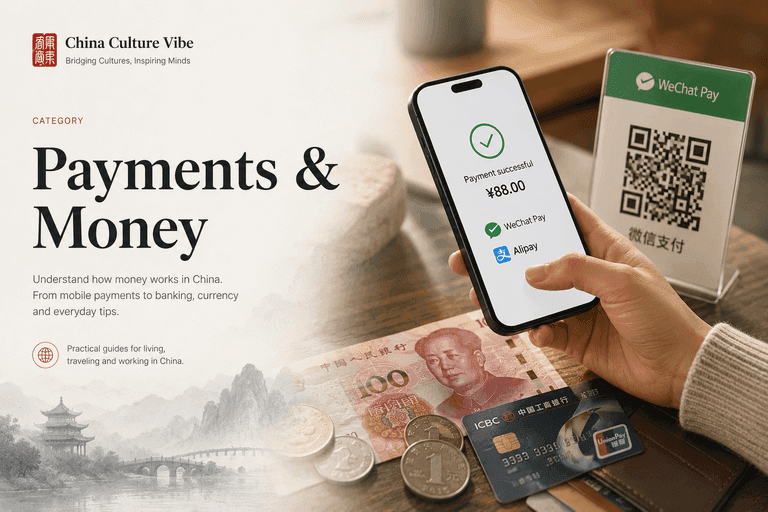
Payments & Money
9In China’s virtually cashless society, setting up mobile wallets is your number one survival skill. This guide provides step-by-step solutions for international tourists using Alipay and WeChat Pay with overseas credit cards (Visa/Mastercard). Discover proven travel hacks to avoid the 3% transaction fee on purchases over 200 RMB, resolve passport identity verification (ID) failures, and manage cash alternatives for a seamless 2026 trip.
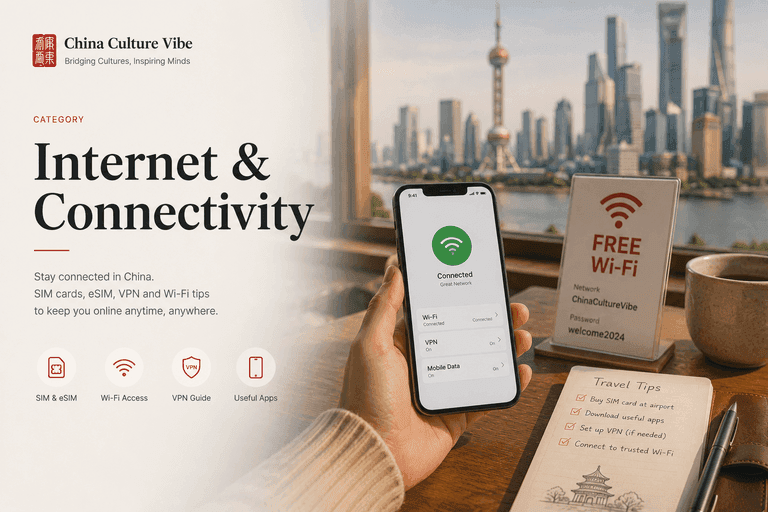
Internet & Connectivity
5Staying connected behind the Great Firewall requires the right strategy. Traditional VPNs (like Surfshark or ExpressVPN) often face severe blockages upon arrival. We reveal why Data-Only eSIMs (via Nomad, Airalo, or Trip.com) are the ultimate 2026 travel hack—routing your data through overseas servers to grant native, unrestricted access to Instagram, WhatsApp, Google, and TikTok without needing a VPN client.
2026 China Travel Internet Solutions: A Definitive Comparison
To give international travelers the clearest path to staying connected, we evaluate the three major connectivity methods across the core metrics that matter most on the ground.
| Evaluation Metric | Foreign Travel eSIM(e.g., Nomad, Saily, Holafly) | Local Physical SIM Card(China Mobile / Unicom) | Standalone VPN Client(Paired with Local Wi-Fi) |
|---|---|---|---|
| Stability & Wall Bypass | Very High. Traffic is natively routed through overseas servers, automatically bypassing the Great Firewall. No app drops. | Excellent for Local Sites Only. Blazing fast 5G for Chinese networks, but completely blocks Google/Instagram without a VPN. | Low to Moderate. Due to continuous firewall updates in 2026, commercial VPNs suffer from frequent connection blocks. |
| Price & Transparency | Mid-Range ($1.50 to $40+). Clear upfront tiered packages (e.g., 1GB to Unlimited). Zero roaming shock. | Very Cheap for Huge Data. Low data costs per gigabyte, but carries a high hidden "time cost" at the physical store. | Low Subscription Fee ($3 to $12/mo). Affordable software pricing, but does not include the actual internet data line. |
| Core Functionality | Data-Only. No local Chinese (+86) phone number. Allows Dual-SIM setup to keep home lines active for bank SMS. | Full Local Integration. Comes with a local (+86) number, essential for registering on deep niche Chinese lifestyle apps. | Traffic Encryption Only. Drains smartphone battery significantly due to constant protocol obfuscation. |
| Setup & Friction | Instant & Frictionless. Scanned via a QR code and installed digitally. Must be activated before departure. | High Friction. Requires locating an authorized operator outlet and completing mandatory passport real-name verification. | High Maintenance. Must be installed before entering the country. Requires manual server hopping and protocol tweaks. |
| Best Suited For | Short-to-mid term tourists (1 to 30 days) seeking a seamless, stress-free internet experience out of the box. | Long-term expats, business travelers, or digital nomads staying more than 30 days who need local numbers. | Budget backpackers willing to hunt for public Wi-Fi and toggle settings manually to save money. |
💡 Architect's Key Takeaway:
For 95% of international tourists entering China via the 2026 visa-free policy, a Foreign Travel eSIM is the undisputed gold standard. It bypasses the psychological barrier of being disconnected and completely eliminates the logistical nightmare of hunting down a physical mobile store while offline.
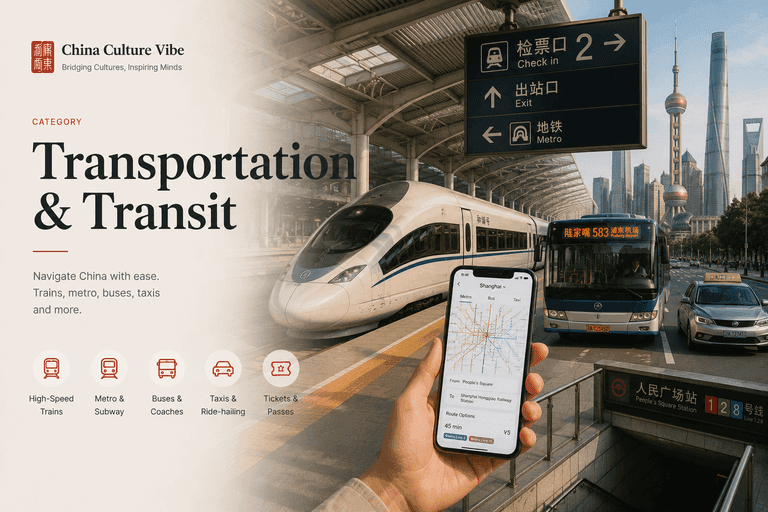
Transportation & Transit
8Navigating China's world-class transit system can be daunting due to language and registration hurdles. This section breaks down how to master the 12306 English app for booking high-speed rail tickets, troubleshooting name-match errors, and boarding gates using just your passport. Plus, learn how to use Didi (China's Uber) within Alipay to communicate seamlessly with local drivers without speaking Chinese.
📌 Core Quick Reference Guide: China Travel Transportation Apps
| App Category | Recommended App | Core Features | Why Foreigners Need It (2026 Latest Trends) |
|---|---|---|---|
| Super Apps / Gateways | Alipay | Scan to ride metro/bus, bind international bank cards | The "master key" for public transit in the vast majority of Chinese cities. |
| Inter-city Rail | Trip.com / 12306 | Book high-speed bullet train tickets, check live schedules | Passport serves as your e-ticket. Trip.com offers the most foreigner-friendly 24/7 English customer service. |
| Ride-Hailing & Taxis | DiDi | Call private ride-hailing cars or traditional taxis | Built-in in-app translation; can be used without a local Chinese phone number when accessed via Alipay. |
| Map & Navigation | Apple Maps / Amap | Route planning for walking, metro, and public transit | Google Maps is heavily offset/inaccurate in China. Apple Maps provides the most accurate layout in English. |
| Metro Specialized | MetroMan | Check metro routes, transfer guides, and fares offline | 100% in English; perfect for navigating subways in mega-cities like Beijing, Shanghai, Guangzhou, and Shenzhen. |
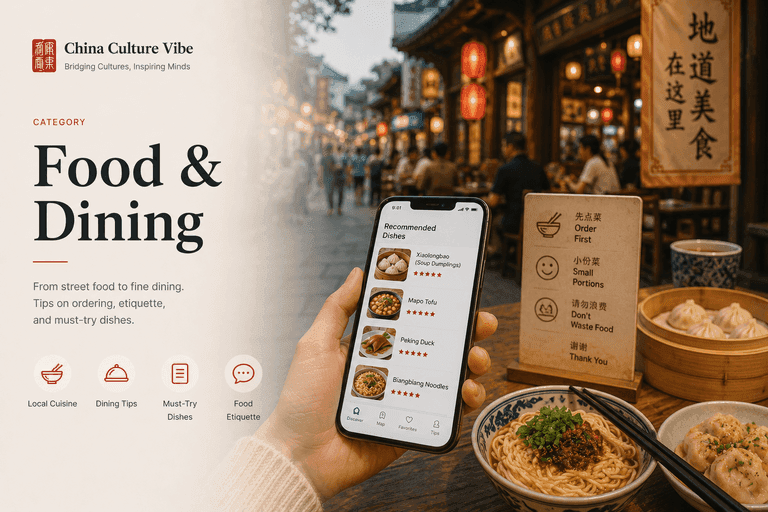
Food & Dining
7Dining in China is heavily digitized, relying almost entirely on QR code scanning via WeChat or Alipay mini-programs. If you encounter non-English menus or phone-number paywalls, our visual guides show you how to translate interfaces in real-time. We also provide downloadable Chinese allergy cards and survival tips for vegans, vegetarians, gluten-free travelers, and those managing severe peanut or seafood allergies.
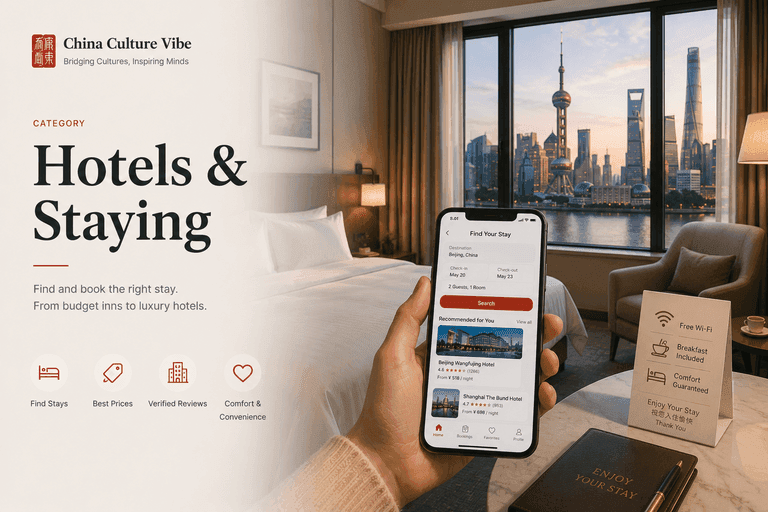
Hotels & Staying
6China has strict legal regulations regarding accommodation for overseas visitors, including the mandatory 24-hour temporary residence registration. To avoid being turned away at check-in due to a property lacking foreign guest qualifications, use this guide to find verified, foreigner-friendly budget hotels on platforms like Trip.com and understand your legal rights as an international traveler.
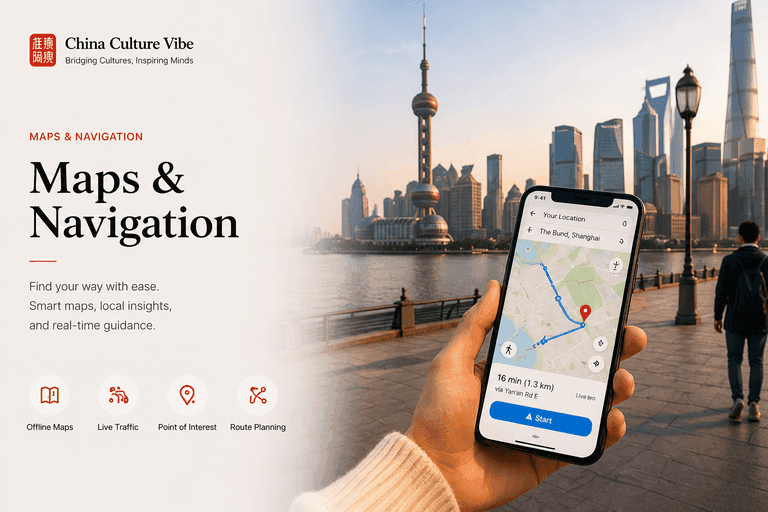
Maps & Navigation
3Because Google Maps is blocked and severely outdated in China, relying on it leads to broken routes and GPS coordinates shift. For iOS users, we explain how Apple Maps leverages localized data to provide flawless, English-language turn-by-turn navigation. For Android users, we provide clear walkthroughs on decoding localized apps like Amap (Gaode) and Baidu Maps using pinyin and iconography.
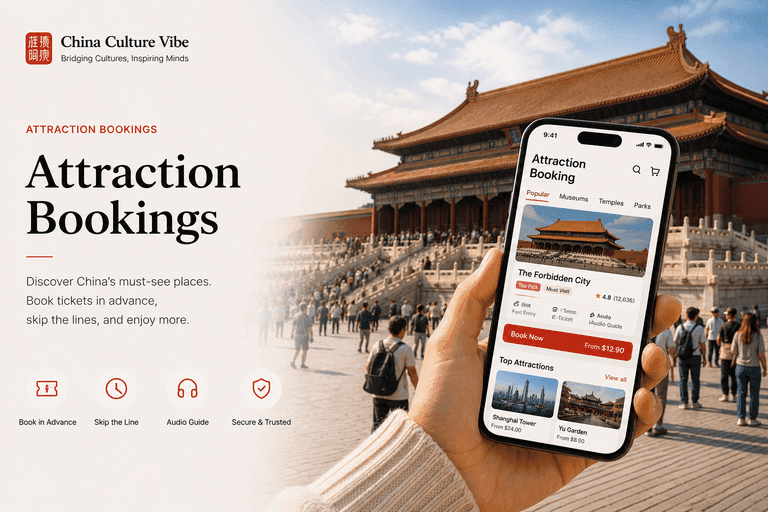
Attraction Bookings
4Top-tier sites like the Forbidden City, the Terracotta Warriors, and Zhangjiajie utilize strict real-name registration systems and require booking 7 to 15 days in advance. Since many official WeChat mini-programs reject international phone numbers or foreign credit cards, we outline the exact steps to reserve tickets yourself or safely use third-party alternatives (like Trip.com) to guarantee your entry.
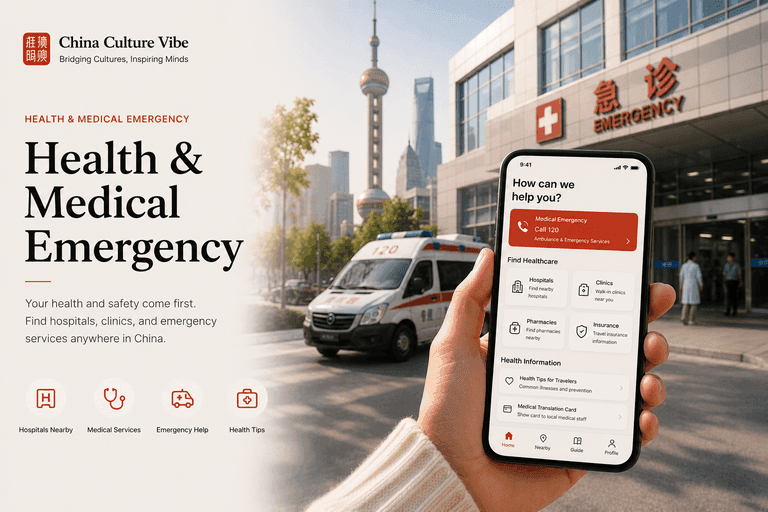
Health & Medical Emergency
3Facing a medical issue in a foreign country can be daunting, but China’s healthcare system is highly efficient, modern, and affordable once you know how to navigate it. Use this practical step-by-step guide to get the care you need.
🚑 1. Medical Emergencies: Dial 120
In a severe, life-threatening emergency, immediately dial 120 to call a public ambulance.
- Crucial Tip: Emergency dispatchers may not always speak fluent English. If you are at a hotel, restaurant, or tourist attraction, ask a local staff member or bystander to make the call for you so they can communicate your exact location.
- Ambulance services in China function as affordable public utilities, meaning costs are fixed and very low compared to Western countries.
🏥 2. Where to Go: Public vs. Private Healthcare
Depending on your location, budget, and travel insurance, you have two primary options:
- Option A: Grade 3A Public Hospital International Departments (三甲医院国际部)
- What it is: "Grade 3A" (三级甲等 - Sānjiǎ) is the highest rating a Chinese hospital can receive, indicating top-tier medical technology and expert doctors. Top hospitals in major cities (like Beijing, Shanghai, Guangzhou, and Chengdu) feature dedicated International or VIP Departments.
- The Experience: These departments provide English-speaking doctors, western-style service, and shorter wait times. They are slightly more expensive than standard public care but offer excellent medical standards, and some support direct billing with international health insurance.
- Option B: Private International Hospitals (私立国际医院)
- What it is: Premium facilities like United Family Healthcare (和睦家) or Parkway Medical (百汇).
- The Experience: Mostly found in Tier-1 cities, they offer 100% English-speaking environments and seamless western-standard clinic experiences. However, they are highly expensive and best suited for travelers with comprehensive global travel insurance.
📋 3. Step-by-Step Public Hospital Walk-in Process
If you visit a public hospital's outpatient area, you generally do not need a prior appointment. Follow these steps:
- Registration (挂号 - *Guàhào*): Go to the registration window or information desk. Present your original passport to get a physical hospital card. You will pay a minor registration fee (typically $2 to $5 USD). Tell them your basic symptom (e.g., fever, stomach ache) so they can assign you to the correct department.
- Waiting (候诊 - *Hòuzhěn*): Take your registration slip to the designated department floor. Wait in the seating area. Keep an eye on the digital screens; your ticket number or the pinyin translation of your name will appear when it is your turn.
- Consultation (看诊 - *Kànzhěn*): While many younger doctors speak conversational English, it is highly recommended to have a translation app (such as WeChat Translate, DeepL, or Pleco) ready on your phone to accurately explain your symptoms and medical history.
- Payment & Pharmacy (缴费与取药 - *Jiǎofèi yǔ Qǔyào*): After the doctor gives you a prescription, return to the cashier window or a self-service kiosk to pay for the medication and treatment. Payment can be made via Alipay, WeChat Pay, or credit cards in larger hospitals. Once paid, head to the hospital’s internal pharmacy window to collect your medicine.
💊 4. Buying Over-the-Counter (OTC) Medicine at a Pharmacy (药房 - Yàofáng)
For minor ailments like "China Belly" (traveler's diarrhea), a mild cold, or minor cuts, you can skip the hospital entirely. Look for a street pharmacy, recognizable by a green cross or the characters 药房 (Yàofáng).
Show the pharmacy staff the Chinese names below using your translation app:
| Condition / Symptom | Common English Medication | Chinese Name & Pinyin |
|---|---|---|
| Traveler's Diarrhea / Loose Stool | Montmorillonite Powder (Smecta) | 蒙脱石散 (Méngtuōshí Sǎn) |
| Stomach Cramps / Diarrhea | Berberine | 黄连素 (Huángliánsù) |
| Fever / Pain Relief | Ibuprofen | 布洛芬 (Bùluòfēn) |
| Fever / Pain Relief | Acetaminophen / Paracetamol | 对乙酰氨基酚 (Duìyǐxiān’ānjīfēn) |
| Mosquito Bites / Itching | Essential Balm / Cooling Oil | 风油精 (Fēngyóujīng) / 清凉油 (Qīngliángyóu) |

Visa-Free Policy
1🌐 Welcome to China Entry & Visa Policy Hub (2026 Edition) Navigating China’s latest entry regulations has never been simpler. Whether you are traveling for tourism, business, or transiting through major hubs, China has introduced unprecedented 30-day unilateral visa exemptions for 50 countries, upgraded 240-hour transit policies, and launched 5 new entry facilitation measures to streamline your journey.
🛑 Confused About Your Stay Duration or Allowed Regions? Policy rules can be complex depending on your passport, entry port, and tour type. Avoid calculations errors that could lead to overstay fines.
👉 Try Our Smart Visa-Free Check Tool Now
Instant Eligibility: Find out if you qualify for unilateral or regional visa exemptions in 3 seconds.
Precise Stay Calculator: Learn exactly how your 30-day or 240-hour window is calculated (starting from 00:00 the next day).
Permitted Area Mapping: Know exactly which cities or provinces you can legally explore without a traditional visa.
Link to official policy:
List of Countries Covered by Unilateral Visa Exemption Policies
Free Travel Tools
Quick checks and generators to save you time and headaches
China Visa-Free Checker
Check if your nationality qualifies for visa-free entry, transit, or unilateral exemption policies.
Am I visa-free?China Travel Checklist
Tick off passports, apps, payments, packing, and get a readiness score with real trip risks.
What do I need?China Taxi Address Card
Generate a printable Chinese address card from your booking confirmation to show taxi drivers.
Create my cardEmbassy Finder
Find your country's embassy or consulate in China — address, phone, and emergency line.
Find my embassyWhy Travelers Trust Us
Tested by Travelers
Every guide is verified by people who've actually been there
Skip to What You Need
Jump directly to the exact minute that answers your question
Find Answers Fast
Search in plain English, get results in seconds
100% Free, Always
No sign-up walls, no paywalls. Just helpful info.